 Douro Valley Wine Tour
Best Time to Visit the Douro Valley
Travellers debating the best time to visit Douro Valley wine country are really choosing between two different trips more than picking the tour: the trip you get in April looks nothing like the one you get in August. This guide lines the seasons up side by side: temperatures, harvest dates, crowds, daylight and prices, so the month you pick matches the trip you actually want.
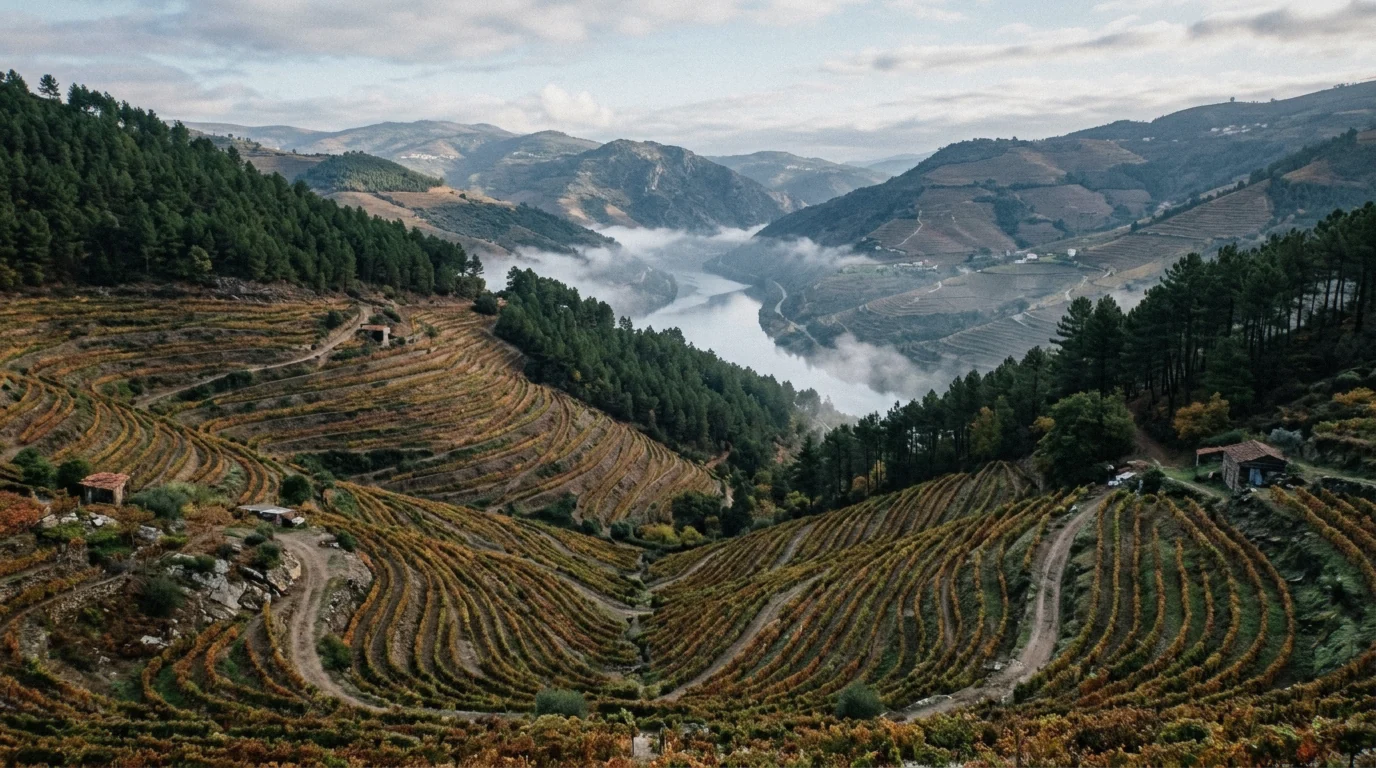
Late October light over the terraces, after the harvest crews have gone home.
Quick answer The short version: two golden windows, one hot one, one quiet one
April, May, June, September and October give the Douro Valley at its best: comfortable temperatures, green or golden terraces, and every tour, cruise and quinta on a full schedule. July and August are beautiful but hot, with heatwaves that push past 35°C in places. Mid-September to mid-October is harvest, the busiest and most expensive stretch of the year. Winter is quiet and cheap, with highs near 11-13°C and reduced cruise schedules. For most trips the real choice is spring greenery or harvest energy, and the tour calendar fills first for September.
Key takeaways
- Overall best months: April, May, June, September, October and early November, when temperatures are comfortable and everything runs normally
- Peak harvest window is roughly mid-September to mid-October. Any harvest-period booking needs 6 to 8 weeks of lead time
- July and August average highs of 26-28°C, with heatwaves above 35-40°C in spots like Pinhão. Plan walks before 10:00 and after 18:00
- November is one of the wettest months, July one of the driest, often with only a couple of millimetres all month
- Winter is the cheapest and quietest stretch, with some quintas closed midweek and river cruises on reduced schedules
Which Season Fits Your Trip
If You want green hills, mild weather and thinner crowds
Go April to May. Highs run from the mid-teens to the mid-20s°C, almond blossom can linger into March, and prices sit below summer levels.
If You want long days and evenings by the river without peak heat
Go in June. Full greenery, warm nights and crowds that have not yet peaked.
If You want to see the harvest at full speed
Go mid-September to early October and book early. Expect the year's biggest crowds and highest prices.
If You want autumn colour after the rush
Go October to early November. The harvest winds down, the terraces turn gold and red, and visitor numbers drop.
If You want the lowest prices and near-empty viewpoints
Go December to March. Accept short days, a real chance of rain and reduced cruise schedules.
Climate Basics: Temperature and Rain
The Douro Valley has a Mediterranean-style climate: hot, dry summers and cool, wetter winters. The figures below come from published climate summaries for the valley, and they set the frame for every recommendation in the rest of this guide.
The year in one table
Five seasons do the work of describing this valley, because the harvest divides autumn from the rest of the year. The table pulls the temperature bands together with what each stretch actually delivers.
| Season | Months | Typical weather | What it means |
|---|---|---|---|
| Late winter | February to early March | 13-16°C highs, cold mornings and nights, a real chance of rain | Almond blossom, empty paths, the lowest prices of the year |
| Spring | March to May | Mid-teens to low 20s°C, some showers but many sunny days | Lush green hillsides, comfortable hiking, cruising and tastings |
| Summer | June to August | June pleasant, July and August 26-28°C or higher, heatwaves above 35-40°C | Guaranteed sun and a busy river, brutal midday heat |
| Harvest and autumn | September to November | September warm like late summer, October mild, November cooler and wetter | Grape picking and festivals, then the colour peak, then quiet |
| Winter | December to February | 11-13°C highs, 4-7°C lows, more rain and foggy mornings | Cheapest weeks, fireside tastings, reduced cruises and closures |
Rain, heat and the extremes
Rain has a simple pattern: November is one of the wettest months, while July is among the driest, often with only a couple of millimetres across the whole month. Heat is the bigger summer risk. Average highs in July and August sit around 26-28°C, but heatwaves push readings above 30-35°C and occasionally past 40°C in parts of the region such as Pinhão.
Winter days run 11-13°C with lows near 4-7°C. For a live forecast before you travel, Portugal's national weather service IPMA publishes current conditions for the north of the country.
Heat-survival basics for July and August
Summer in the valley is workable if the day is shaped around the heat rather than against it.
The routine local guides give is consistent. Walk the vineyards before 10:00 or after 18:00, with mid-summer golden hours running roughly 18:00 to 21:00. Book rooms with air-conditioning and preferably a pool. Wear a hat and light clothing and carry water through the day.
In winter and early spring the problem inverts: pack layers, a waterproof jacket and closed shoes, because days can flip between sun and showers within a few hours.
Season by Season: What You Actually Get
Temperature bands only say so much. Here is what each stretch of the year delivers on the ground, from almond blossom to the last of the autumn colour, with the trade-offs stated plainly.
Late winter, February to early March: almond blossom
Daytime highs sit around 13-16°C with cold mornings and nights and a chance of rain. The spectacle is the almond trees, which bloom from February into early March depending on the year and cover the terraces in snow-white flowers. Local walking companies call it one of the most memorable shows the valley puts on.
Crowds are minimal, prices are at their lowest, and winery visits feel intimate. Markets carry the first citrus from northern Portugal, while the vineyard work itself is pruning and preparation rather than picking. The trade-offs: short days, some closures of hotels and restaurants midweek, and river cruises on reduced or paused schedules.
Spring, March to May: green and mild
March still counts as low season, with moderate hotel prices and good availability. April brings more stable weather but can still throw rainy spells. May is warm, bright and very comfortable, with highs reaching the mid-20s°C and long days that suit river cruises and outdoor lunches.
The landscape is the argument for this window: lush green hillsides, fresh vine growth and, early in the season, the last of the almond blossom. Many wine travellers and local guides rate April and May among the best months overall, combining comfortable temperatures with manageable crowds.
Summer, June to August: long days and real heat
June is warm and generally pleasant, with full greenery and lively evenings outdoors. July and August are a different animal: average highs around 26-28°C, heatwaves above 35-40°C in some Douro sub-regions, and a valley that feels dry and sun-baked by afternoon. July is also one of the driest months of the year.
August is high season proper, with busy roads, full hotels and higher prices, and harvest-related demand starts rising in late August. In warm years, some estates begin picking certain grapes at the very end of August.
The pattern that works: activity early and late, a long midday break, and evenings by the river, which is also when the summer festivals happen.
Harvest and autumn, September to November: vindima
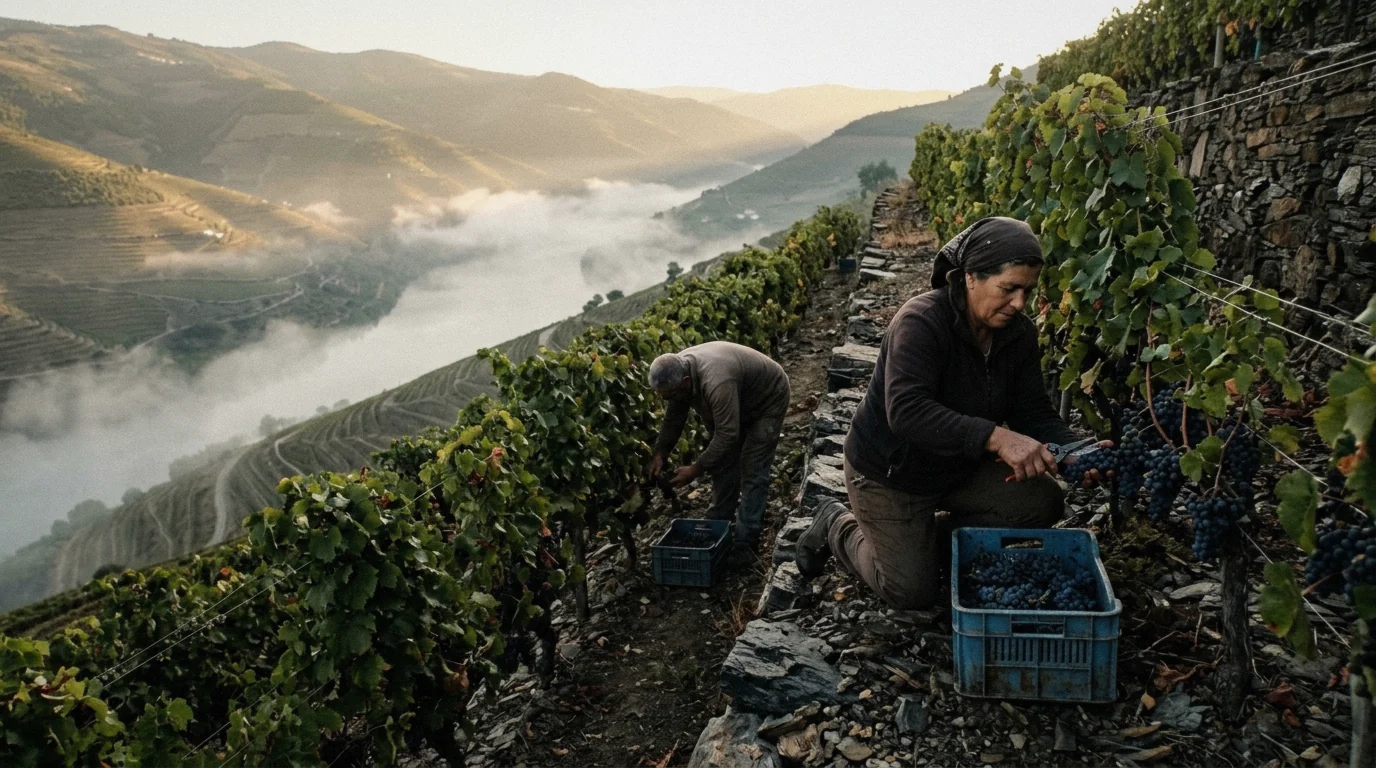
The main grape harvest runs from roughly mid-September to mid-October, sometimes starting as early as late August and occasionally stretching into late October depending on weather and grape variety. September feels like late summer, with picking teams, tractors, crates and, at some quintas, traditional foot-treading in stone lagares. October cools to something pleasantly mild and the harvest finishes, usually by late in the month. November turns cooler and wetter and much quieter.
Two things matter for planning. First, white grapes come in slightly earlier than reds, and the exact dates shift every year with temperature and rainfall. Second, harvest weeks, September especially, are among the busiest and most expensive times to visit, with limited availability at popular quintas. The month-by-month mechanics have their own write-up in the harvest season guide.
Winter, December to February: mist and fireplaces
Highs around 11-13°C, lows down near 4-7°C, more frequent rain and foggy mornings. Bare vines and soft winter light give the valley a stark, atmospheric look on clear days.
Some quintas and small hotels close part of the week and cruise schedules shrink. What that buys: the lowest prices of the year, almost no crowds, plenty of time to talk with winemakers, and long meals by the fireplace. Repeat visitors describe winter stays as wonderful for calm, food and wine, provided rainy days are accepted and the plans shift toward indoor tastings and slow meals.
September Harvest or October Colour?
The two most argued-over windows in the Douro calendar, compared honestly.
What we genuinely like
- September puts the whole harvest on display: picking crews, tractors, full vines and foot-treading in the lagares at some quintas
- Warm late-summer weather, with September days of 20-28°C and low rainfall
- Village harvest festivals run through the month, including large celebrations in Peso da Régua and a riverside one in Pinhão
The honest downsides
- Harvest weeks are the busiest and most expensive of the year, with limited availability at popular quintas
- Evening trains, viewpoints and restaurants are crowded, and everything needs booking well ahead
- Exact picking dates shift every year, so a trip built around a specific moment can miss it
Who it's NOT for: Anyone who wants empty roads and spontaneous plans. If that is the trip, come in the first half of October after the rush or in late May, when the weather is nearly as good and nothing needs booking months ahead.
Sunrise, Sunset and the Best Light
Daylight shapes a Douro day more than temperature does, because the views are the product. The windows below come from seasonal sunrise and sunset patterns in the valley, matched to the slots photographers and local guides actually head out for.
Light windows by season
The valley faces matter here: south-facing terraces catch the morning sun, and the river bends catch the evening one. Plan viewpoint stops and boat rides around the slots in the right-hand column.
| Season | Sunrise | Sunset | Best light windows | Good for |
|---|---|---|---|---|
| Late spring to summer, April to August | 06:00-07:00 | 20:30-21:30 at peak | 30-45 minutes after sunrise, and 19:30-21:00 | Sunrise terraces, golden-hour viewpoints and evening boat rides |
| Autumn, September to October | 07:00-07:30 | 19:00-19:30 | 07:30-08:30 and 18:00-19:30 | Autumn colour photography in soft, low light |
| Winter, November to February | 07:30-08:00 | 17:00-17:30 | 08:00-09:00 and 16:00-17:00 | Crisp clear-day views, with an extra layer in the bag |
Practical light notes
In summer, sunset viewpoints can still feel hot until about 19:00, so the golden hour doubles as the comfortable hour. In winter, early evenings cool down quickly and the usable day is short, which is why winter itineraries front-load the viewpoints.
Mid-summer walks work best around 06:30-10:30 and again from roughly 18:00 to 21:00, when the terraces finally lose the furnace heat. The middle of a July day is for lunch, a pool or a cellar, not a slope.
So, When Should You Go?
Everything above compresses into a handful of decisions. The rankings travellers and local guides actually use are consistent, and they are a sensible starting point.
The rankings that keep coming up
Detailed local season guides that score every month land on the same conclusion: March, September and October often tie as the best balances of weather, prices and availability, with September and October praised for the harvest and the autumn colours. April and May get the same verdict for greenery and comfort.
Traveller feedback splits along expected lines. September draws praise and complaints in the same breath, described as magical but crowded and pricey. October converts more visitors into repeat champions, with fewer tourists, foliage at its peak and leaves that hold on the vines even after the picking ends. Late-October forum reports call the temperatures likely great with occasional rain. Winter, as noted, wins for calm, food and wine.
The five-line decision
Choose April to May for green hills, mild weather and thinner crowds. Choose June for long days and warm evenings without the late-summer furnace. Choose mid-September to early October for harvest activity and busy wineries, priced accordingly. Choose October to early November for colour, comfort and fewer people. Choose December to March for low prices and quiet over guaranteed sunshine.
What you do in the valley barely changes with the season. The wine does not either. For what the grapes turn into, the wine guide covers the styles, and the valley overview explains why the terrain produces them. The homepage season summary repeats the short version if you want it in one glance.
What the season does to a tour day
The guided days run all year, but the season changes what the same itinerary delivers. Spring departures get the uncrowded tastings and green views that reviewers rate highest, with availability still easy to find. Summer departures start early to beat the heat and spend the midday hours in cellars and on the water, where the temperature is survivable. September departures are the year's most requested and the most expensive, with limited availability at the popular quintas, so the date needs locking well ahead. October runs the same routes through the colour peak with thinner crowds, which is why value hunters and photographers keep landing on it.
Whatever the month, the fix is the same: compare the side-by-side lineup on price, group size and route before the calendar decides for you.
Questions About Timing a Douro Valley Trip
What is the best month for the harvest in the Douro Valley?
The peak runs from mid-September to mid-October, when the red varieties come in and winery activity is at its height. White grapes are picked first, from late August into early September, and some years push the red harvest into late October. Expect the busiest and most expensive weeks of the year and book anything harvest-specific well ahead.
What is the hottest month in the Douro Valley?
July and August, with average highs around 26-28°C and heatwaves above 35-40°C in some sub-regions, occasionally passing 40°C near Pinhão. Late July and August are the least comfortable stretch for midday hiking and outdoor activity. Evenings by the river stay pleasant, and summer festivals run through the season.
When does the almond blossom bloom in the Douro Valley?
From February into early March depending on the year. The blossom covers the terraces in white flowers while the vines are still bare, and it coincides with the lowest prices and smallest crowds of the year. Some hotels and restaurants close midweek in this stretch and cruise schedules are reduced.
Is the Douro Valley worth visiting in winter?
If quiet and price matter more than outdoor time, yes. Daytime highs run 11-13°C with lows near 4-7°C, rain is more frequent and mornings can be foggy. Some quintas and small hotels close part of the week and cruises run reduced schedules. In exchange you get intimate tastings, long fireside meals and empty viewpoints.
When are the autumn colours at their best in the Douro Valley?
October into early November, with the colour peak in mid to late October. The harvest is mostly finished by late October, but the leaves stay on the vines and the terraces turn gold, orange and crimson. Travellers who go for the colour consistently pick this stretch as their favourite version of the valley.
Which month has the best balance of weather, prices and crowds?
March, September and October come up repeatedly in local season rankings as the best overall balances, and late May and early June sit close behind. The practical pattern: shoulder-season weeks cost meaningfully less than harvest weekends while delivering nearly the same weather, and you can still catch the edges of the harvest in early October.
How much does it rain in the Douro Valley?
The pattern is lopsided. November is one of the wettest months, while July is among the driest, often with only a couple of millimetres for the whole month. Spring can bring showers, April especially, and autumn rain builds through October. Pack a waterproof layer outside high summer and check the forecast on IPMA before travel.