 Douro Valley Wine Tour
Douro Valley vs Other Wine Regions: Tuscany, Rioja, Bordeaux and Alentejo Compared
Douro Valley vs other wine regions is really a comparison of five different holidays. This guide puts the Douro Valley against Tuscany, Rioja, Bordeaux and Portugal's own Alentejo on wines, scenery, costs, crowds and access, so the choice comes down to your trip rather than the marketing.
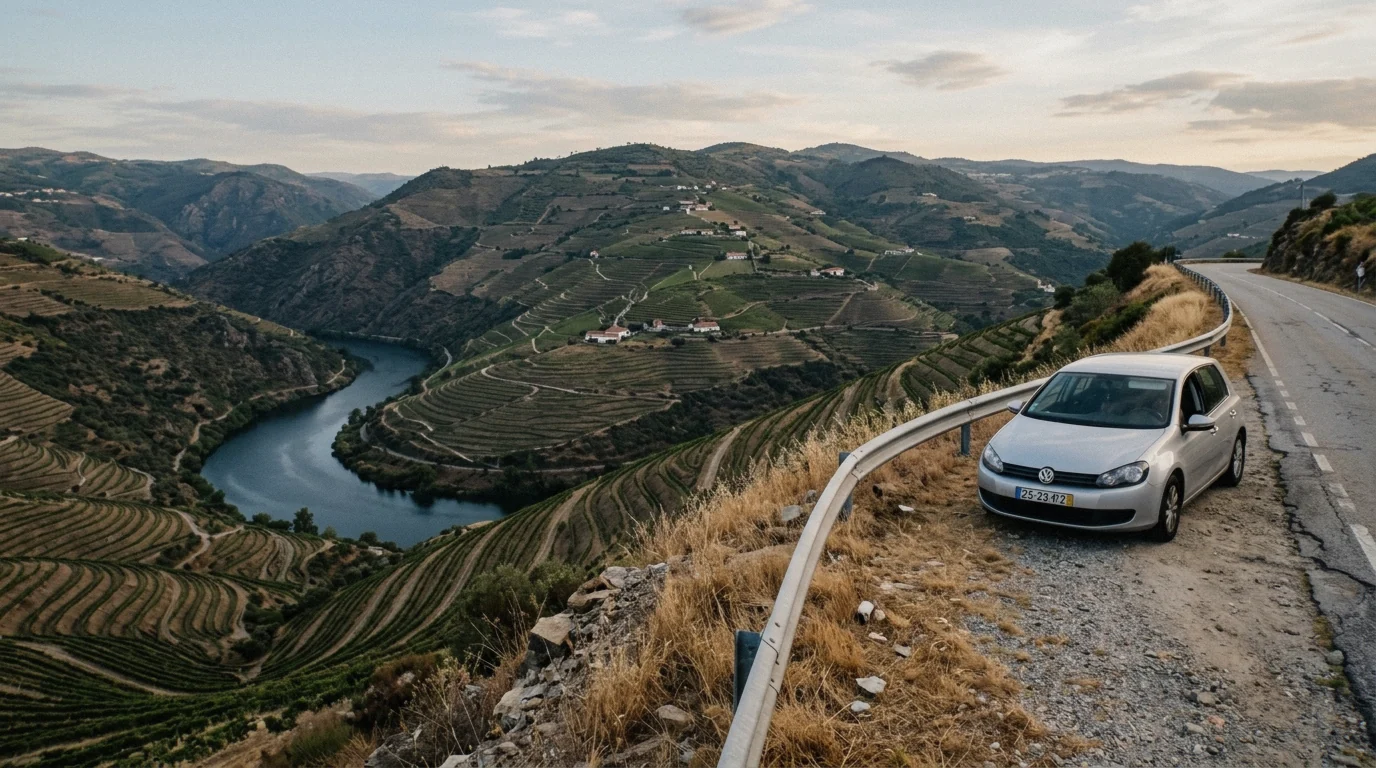
The Douro's hand-built terraces fall straight into the river: no other region on this page pairs wine with scenery this vertical.
Quick answer Douro versus Tuscany, Rioja, Bordeaux and Alentejo in one paragraph
Pick the Douro Valley for drama and authenticity: UNESCO-listed terraces above a working river, port wine made nowhere else, and harvest foot-treading each autumn. Pick Tuscany for Renaissance towns and polished infrastructure, Rioja for value and pintxos, Bordeaux for prestige and formal chateau tastings, and Alentejo for quiet plains and the lowest crowds. Guided-day prices land in a similar band almost everywhere, so the real sorting happens on experience, which is why the side-by-side comparison of the sixteen Douro departures starts with what each day includes.
Key takeaways
- The Douro is the only region here whose signature wine, port, is legally produced nowhere else
- Rioja and Alentejo are the value plays, Bordeaux the splurge, Tuscany the polished all-rounder
- Harvest changes the Douro more than any rival region: grape picking and foot-treading tours run in September and October only
- Spring, April to May, and autumn, September to October, suit every region on this page, and the best-time guide breaks the Douro down month by month
Why the Douro Valley Starts the Comparison
Before the head-to-heads, the case for the home team of this comparison, stated the way other regions cannot copy it.
A landscape the others cannot match
The Douro is a UNESCO World Heritage site: dramatic ancient terraces carved into steep schist slopes that plunge down to the winding river. It is the birthplace of port, the world's first demarcated wine region back in 1756, and it now also pours acclaimed unfortified reds and whites from the same slopes. Ancient craft such as foot-treading still runs alongside modern winemaking.
Travellers put it plainly: a verified reviewer called it the "Best wine tasting with show-stopping views," and The Wine CEO blog noted its "show-stopping views, incredible hospitality, and some of the best wines." The longer version of this argument lives in why people choose the Douro Valley.
Access, costs and the day-tour format
The region is reachable from Porto by a scenic riverside train, by car on winding roads, or on an organized tour, and the options are laid out in how to get from Porto to the Douro Valley. Costs run mid-range to high-end, with rustic quintas at one end and luxury river hotels at the other. The day-tour format is a cornerstone here: cruises, quinta visits and viewpoint stops bundle into one booking, which is the format the tables below price against each rival region.
Douro Valley vs Tuscany
Two Old World titans with opposite personalities: Iberian terraces versus Italian rolling hills, power versus polish.
Wines and scenery
The Douro is famous for port in its ruby, tawny and vintage forms, plus powerful fruit-driven unfortified reds from Touriga Nacional, Tinta Roriz and Touriga Franca, and a growing set of crisp, mineral-driven whites. The setting is rugged and grand: steep hand-carved terraces dropping to a river that is part of every view. Tuscany answers with Sangiovese-based reds, Chianti Classico, Brunello di Montalcino and Vino Nobile di Montepulciano, typically elegant, savory and food-friendly, over rolling hills, cypress-lined drives and medieval hilltop towns.
As The Cheeky Vino blog put it, "Its historical streets beckon with an irresistible blend of Renaissance elegance."
Costs, crowds and the table
Both regions price mid-range to high-end, though Tuscany's agriturismo stays in prime locations can be expensive and are often felt as less value for the money because of the crowds. Tuscany counters with world-famous food, fresh pasta, truffles, Pecorino, wild boar and the Bistecca alla Fiorentina, plus cooking classes and enough non-wine activity to carry a family trip. The Douro answers with hearty Portuguese cooking, bacalhau, cozido, feijoada and grilled meats, farm-to-table lunches at the quintas, and crowd levels that stay moderate outside harvest.
Tuscany's infrastructure is the more polished, the Douro's experience the more raw.
What a guided day costs in each
The prices below are the figures this comparison pulled from the tour listings for a standard guided day with tastings in each region, with the booking note and the decision carried in the last column.
| Listing | Duration | Price | Who it suits |
|---|---|---|---|
| Douro: wine tour with lunch, tastings and river cruise | about 9.5 hours | EUR 95-120 per person | Two wineries plus the river: the full-valley day |
| Douro: small-group tour with tasting, lunch and cruise | about 9 hours | EUR 100-130 per person | Fewer seats, more attention at each pour |
| Douro: private wine tour with lunch and cruise | about 9 hours | EUR 200-300+ per person | Your group only, fully customizable |
| Tuscany: day trip from Florence with tasting and lunch | about 8-9 hours | EUR 80-100 per person | Chianti Classico without renting a car |
| Tuscany: Siena, San Gimignano and Chianti from Florence | about 10 hours | EUR 80-100 per person | Wine plus two medieval towns in one day |
| Tuscany: hot air balloon flight with wine and food tasting | about 3 hours | EUR 300-400+ per person | A morning splurge, not a wine education |
Douro Valley vs Rioja
Peninsula neighbours with a shared border and completely different accents: fortified sweetness and terraces on one side, oak-aged Tempranillo and pintxos on the other.
Different signatures from different histories
Rioja is built on Tempranillo-dominant reds blended with Garnacha, Mazuelo and Graciano, classified by ageing into Crianza, Reserva and Gran Reserva, with white Rioja from Viura alongside. The landscape is the fertile Ebro valley under the Sierra de Cantabria, medieval villages such as Laguardia, and striking modernist winery architecture, a mix one traveller on the Two Cameras And A Bucket List blog summed up as "It was amazing to walk through the vineyards." The Douro's answer is port plus native-grape dry reds on terraces that fall to the river. Neither has the other's party trick.
Food, access and value
Rioja is a foodie's region: pintxos crawls in Logroño, lamb and pork dishes, chorizo, patatas a la Riojana, with great flexibility for different diets. It sits on the Camino de Santiago, and its calling-card building is Frank Gehry's Marqués de Riscal. Costs run mid-range and the value is consistently rated excellent, with moderate crowds and spontaneous visits to smaller bodegas often possible.
Access is easiest by car from Bilbao or Logroño. Choose Rioja for value, food and architecture, the Douro for scenery, port and the river.
Guided-day prices, region against region
Rioja days mostly start in Bilbao or Logroño, so the table below compares a full guided day in each region at the prices the platforms listed, with the practical difference in the final column.
| Listing | Duration | Price | Booking note |
|---|---|---|---|
| Douro: lunch, tastings and river cruise from Porto | about 9.5 hours | EUR 95-120 per person | Advance booking recommended |
| Douro: small-group tasting day with lunch and cruise | about 9 hours | EUR 100-130 per person | Book ahead, seats are capped |
| Douro: private day with lunch and cruise | about 9 hours | EUR 200-300+ per person | Book well ahead in harvest |
| Rioja: wineries and Laguardia from Bilbao | about 9 hours | EUR 120-150 per person | Two wineries plus the medieval town |
| Rioja: wineries and picnic lunch from San Sebastian | about 9 hours | EUR 200+ per person | Multiple wineries, picnic format |
| Rioja: private tour with exclusive tastings from Logroño | about 6-8 hours | EUR 200-300+ per group | Smaller bodegas, your own route |
Douro Valley vs Bordeaux
Classic French elegance against Iberian drama, and the clearest price gap in this comparison.
Chateau formality versus river informality
Bordeaux is legendary for Cabernet Sauvignon and Merlot blends, Cabernet-dominant on the Left Bank around Médoc and Pauillac, Merlot-dominant on the Right Bank around Saint-Émilion and Pomerol, plus elegant dry whites and the sweet wines of Sauternes. The scenery is grand chateaux and manicured vineyards, flatter than the Douro and less theatrically built around its rivers. Tastings are formal, often by appointment, and the whole experience is polished: as one blog by Maria Laura Ortiz put it, a blend of the "grandeur of the past and luxury of the present," and as another reviewer joked, "Elegant chateau - Elegant French car!" The Douro trades all that polish for working quintas, unscripted guides and a landscape doing the showing off.
What the money buys
Bordeaux prices run high-end to luxury across accommodation, dining and tours, and the region's 1855 Classification plus collector demand keep the famous bottles expensive. Douro days run mid-range to high-end and buy more hours per euro: a nine-hour lunch-and-cruise day costs less than a Bordeaux morning. Bordeaux fights back with Michelin-starred dining, foie gras, duck confit and Arcachon oysters, the Cité du Vin museum, and Grand Cru Classé visits that remain a genuine bucket-list experience.
Bordeaux day prices against the Douro baseline
The Bordeaux listings below set against the Douro rows in the Tuscany table above, which ran EUR 95 to 300 per person, and the figures are as the platforms published them, with the format difference in the last column.
| Listing | Duration | Price | Format |
|---|---|---|---|
| Saint-Émilion half day with tasting from Bordeaux | about 4.5 hours | EUR 60-80 per person | Village plus one chateau, easy add-on |
| Médoc and Saint-Émilion combined day trip | about 9 hours | EUR 160-200 per person | Both banks in one day, book early |
| Private Bordeaux day to Médoc or Saint-Émilion | about 8 hours | EUR 400-600+ per group | Tailored to your preferences |
Douro Valley vs Alentejo
Portugal's two faces: a dramatic vertical river valley and a vast, quiet plain, separated by half a day's drive.
Amphora plains versus terraced river
Alentejo pours full-bodied, fruit-driven reds from Aragonez, the same Tempranillo, Trincadeira and Alicante Bouschet, many still fermented in traditional clay amphorae, plus aromatic whites from Antão Vaz and Arinto. The landscape is the opposite of the Douro: vast gently rolling plains, cork oak forests, olive groves and whitewashed villages, with the UNESCO city of Évora as a base about a 1.5-hour drive from Lisbon. The Nomadlytics blog called it "a serene escape into a world where time seems to slow down," and the Winekeller blog was blunter: "This isn't a region for the masses."
Costs, crowds and when each wins
Alentejo runs mid-range with some of the best value in European wine tourism, and crowds stay low even in peak season, which makes spontaneous winery visits realistic in a way the Douro's book-ahead harvest weeks are not. Food leans rustic and hearty: black pork, migas, lamb stew, strong olive oil and cheese traditions. The Douro wins on scenery, on port, on the river cruise and on the train journey.
Alentejo wins on tranquility, price and the feeling of having the cellar to yourself. They also combine well inside one Portugal trip rather than competing.
Alentejo day prices from Lisbon
Alentejo days start from Lisbon rather than Porto, and the listings below show where its prices sit against the Douro days described earlier, with the day's actual shape in the last column.
| Listing | Duration | Price | The day includes |
|---|---|---|---|
| Alentejo full-day wine tour with lunch from Lisbon | about 8 hours | EUR 150-200+ per person | Two wineries plus Évora |
| Évora, megaliths and a cork farm with wine tasting | about 9 hours | EUR 90-120 per person | History and nature with wine attached |
| Private Alentejo wine and olive oil tour from Lisbon | about 8-9 hours | EUR 250-350+ per group | Wine plus olive oil, customized |
All Five Regions at a Glance
The table condenses the four comparisons above into one view, using the same criteria throughout: what each region pours, how it looks, what a day costs and who it ultimately suits.
The one-table verdict
Read the last column first, because that is the decision the rest of the row supports.
| Region | Signature wines | Scenery | Cost level | Crowds | Pick this region if |
|---|---|---|---|---|---|
| Douro Valley, Portugal | Port plus robust dry reds and whites | Terraced river gorge, UNESCO-listed | Mid-range to high-end | Moderate, busiest at harvest | You want drama, authenticity and port at the source |
| Tuscany, Italy | Sangiovese reds: Chianti Classico, Brunello | Rolling hills, cypress, hill towns | Mid-range to high-end | High in summer | You want art towns, famous food and easy logistics |
| Rioja, Spain | Tempranillo reds by ageing tier | Ebro valley with modernist bodegas | Mid-range | Low to moderate | You want value, pintxos and architecture |
| Bordeaux, France | Cabernet and Merlot blends, Sauternes | Manicured chateau estates | High-end to luxury | Moderate to high | You want prestige, formality and Michelin dining |
| Alentejo, Portugal | Full-bodied reds, amphora wines | Plains, cork oaks, whitewashed villages | Mid-range | Low | You want quiet, space and the best value |
Which Region for Which Traveller
If It is your first wine trip and you want everything easy
Tuscany: polished infrastructure, English widely spoken, simple to combine with Florence or Rome
If You count value per glass above all else
Rioja, with Alentejo close behind: both pour high quality well under Bordeaux money
If You want the wine world's grandest formality
Bordeaux: appointment-only chateaux, blending workshops and the Cité du Vin
If You want scenery you will still describe in a decade
The Douro Valley: vertical terraces, a working river and harvest foot-treading
If You have already done the famous names
Alentejo: amphora wines, cork country and megaliths, the quietest page on this list
Planning Tips That Apply to Any of the Five
Whatever the destination, the same five planning habits separate a smooth wine trip from a frustrated one.
Five rules from the comparison
These hold across all five regions, and they matter most exactly where crowds are thinnest and beds are fewest.
- Book accommodation and winery visits well in advance for the September-October harvest and for May: the best quinta and chateau guesthouses sell out months ahead
- Match the region to your travel style: the Douro rewards slow travellers who enjoy scenery and authenticity, Tuscany suits culture lovers, Rioja the budget-conscious explorer, Bordeaux the luxury seeker, Alentejo the tranquility seeker
- Rent a car for Alentejo and Rioja, where public transport is limited: in the Douro the scenic Linha do Douro train or the river cruise is a genuine highlight, not a compromise
- Combine regions intelligently: the Douro with Alentejo works beautifully inside Portugal, Tuscany with Bordeaux makes a grand European loop, and Rioja pairs naturally with a San Sebastián food trip
- Do not skip the food: port-braised meats in the Douro, bistecca in Tuscany, pintxos in Rioja, canelés and duck confit in Bordeaux, slow-cooked black pork and açorda in Alentejo
Choosing Between Wine Regions: FAQ
What is the best time of year to visit the Douro Valley compared with the others?
Spring, April to May, and autumn, September to October, flatter every region on this page. The Douro's autumn carries the harvest, Tuscany's adds pleasant temperatures, and Bordeaux's early autumn brings a alive atmosphere. The one warning is Douro and Alentejo summers: the heat can exceed 40°C, about 104°F, in July and August, which turns midday tasting into shade work.
How does Tuscany compare to the Douro Valley for a wine holiday?
Both are exceptional and they offer different moods. Tuscany blends wine with Renaissance art, medieval villages and an easy infrastructure of agriturismo stays. The Douro is rawer, more dramatic and less discovered, better for travellers who want authenticity over polish, with harvest foot-treading and river scenery no Tuscan hill town can copy.
Is Rioja worth visiting as a wine destination?
Yes. Rioja offers outstanding value: world-class Reserva and Gran Reserva Tempranillos at a fraction of Bordeaux prices, genuinely interesting modern architecture such as Frank Gehry's Marqués de Riscal hotel, excellent local food built on pintxos, and far fewer crowds than Tuscany or Bordeaux.
What makes Bordeaux wines so expensive compared with other regions?
The 1855 Classification designated prestigious Grand Cru estates, production at the top chateaux is limited, global collector demand is enormous, and centuries of marketing prestige do the rest. Outside the classified estates, Bordeaux still offers honest value, particularly from appellations such as Fronsac, Bourg and Blaye.
What is the difference between a quinta and a port house?
A quinta is a wine-producing estate with its own vineyards and winery. A port house, names such as Sandeman, Graham's or Ramos Pinto, is usually a larger company, many based in Vila Nova de Gaia across the river from Porto, that blends, ages and markets port sourced from multiple quintas. Many quintas now also bottle and sell their own wines directly.
Is Alentejo worth visiting if I have already been to the Douro Valley?
Yes, because the two are barely the same activity. The Douro is dramatic and vertical, Alentejo vast, flat and meditative. Amphora-made wines, cork oak landscapes, prehistoric megaliths and the walled UNESCO city of Évora make it a distinct destination that complements rather than competes with a Douro visit.