 Douro Valley Wine Tour
How to Get from Porto to the Douro Valley
How to get from Porto to Douro Valley wine country comes down to six transports: car, train, bus, organized tour, private transfer and river cruise. They differ wildly in cost, time and comfort, so this guide puts all six side by side before you commit to one.
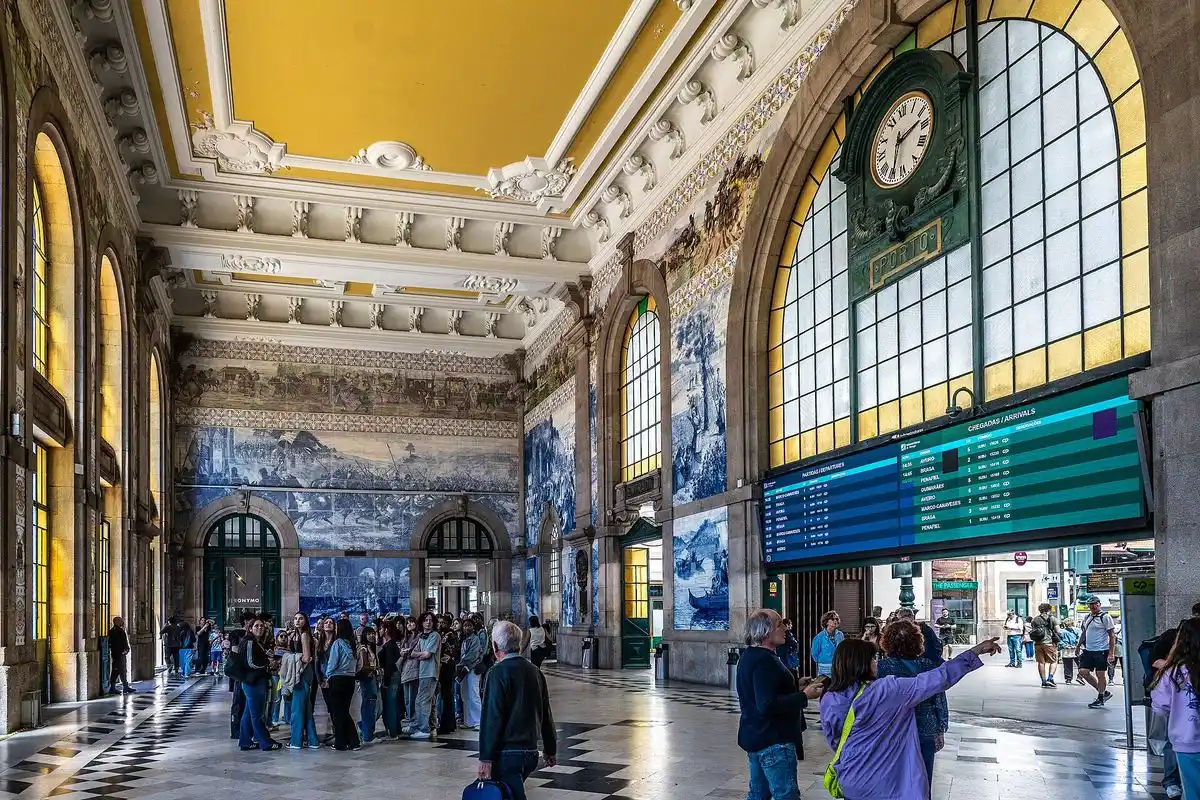
Porto São Bento: the Linha do Douro trains leave from the famous tiled hall. Photo: Michael Gaylard, CC BY 4.0, via Wikimedia Commons.
Quick answer Three options do most of the work: car, train or tour
For most visitors the real choice is between three routes. A rental car or a guided tour covers the 100-120 km in about 1 hour 15 minutes to 2 hours. The train from São Bento takes 2 to 3.5 hours and hugs the river for the final stretch. The intercity bus to Régua is the cheapest option, from under 5 EUR one way. Tours bundle drive, tastings, lunch and often a cruise into one booking, and the comparison table lines them all up. Driving is fastest, but it puts the tasting room off limits.
Key takeaways
- Distance is 100-120 km east of Porto. Driving takes about 1 hour 15 minutes in good conditions, allow 1.5-2 hours with stops
- Trains from São Bento or Campanhã reach Régua and Pinhão in 2-3.5 hours. Check times on CP's Douro line page
- Rede Expressos buses run Porto to Régua in 2-3 hours, from under 4-5 EUR one way on certain schedules
- Long-distance taxis and private transfers quote 130-170 USD one way for the roughly 100 km ride
- If you would rather not plan at all, the tour lineup bundles transport, tastings, lunch and a cruise
The Six Options at a Glance
Every option below lands in the same valley, but they trade speed against scenery and cost against freedom. The figures come from published timetables and operator fares for the Porto to Douro run, with typical rather than best-case values. In practice, most visitors either drive, take the train or join an organized tour, and some pair a full-day cruise with the bus or train for the return leg so the two directions do not repeat the same view.
Side by side
Costs split two ways: per person on public transport and tours, per vehicle for cars and transfers. Times assume normal traffic out of Porto.
| Option | Typical time | Typical cost | What it means |
|---|---|---|---|
| Rental car via the A4 and the N222 | 1h15 to 2h with stops | About 40-70 USD per day before fuel and tolls | Maximum freedom, needs a designated driver |
| Train, CP from São Bento or Campanhã | 2-3.5 hours | From about 12 EUR one way on longer segments | Scenic and relaxed, limited frequency to small stations |
| Intercity bus, Rede Expressos | 2-3 hours | From under 4-5 EUR one way on certain schedules | Cheapest real option, fixed timetable |
| Organized tour from Porto | Full day, 6-10 hours | From 64 USD per person on this site's comparison | Everything handled, nobody drives after tastings |
| Private transfer or taxi | About 1h10-1h15 | 130-170 USD one way | Door to door comfort, priced for groups not solo travelers |
| Full-day river cruise from Porto | All day | Return by bus or train included in most formats | Slowest and most scenic arrival, one big day on the water |
Option by Option
The details that decide which option fits: routes, stations, operators and the catch attached to each.
Driving: the A4 out, the N222 along the river
The standard route runs Porto, the A4 motorway east, the A24, then Peso da Régua, with the famous N222 carrying you along the river toward Pinhão. Distance is around 70 miles or 110 km to Régua. In good conditions the drive takes about 1 hour 15 minutes, and a realistic plan allows 1.5 to 2 hours with stops and traffic.
The payoff is the scenic stretch: the N222 between Régua and Pinhão runs among the terraces and viewpoints and is often described as one of the most beautiful roads in Portugal. A car also makes side trips easy on multi-day itineraries, Amarante, Lamego or Foz Côa all sit within range.
The costs are the ones people undercount: narrow, winding and sometimes steep valley roads that stress nervous drivers, limited parking at popular viewpoints and quintas in high season, and the fact that whoever drives spends the day on soft drinks.
Train: the line that follows the river
The Douro railway is a classic in its own right, with the track following the river past vineyards and steep terraces for long stretches. Trains leave from two Porto stations: São Bento in the centre, famous for its azulejo hall, and Campanhã, the larger hub slightly east. The valley stops that matter are Peso da Régua, Pinhão and, further upriver, Pocinho. The operator is Comboios de Portugal (CP), the national railway, and current times live on cp.pt.
Typical journey time is 2 to 3.5 hours depending on the station and the service. One published example: a CP train from São Bento to Caldas de Moledo on the Douro line takes about 1 hour 59 minutes and usually runs once daily on that section. One-way fares for longer segments start from around 12 EUR.
The two catches: frequency is limited on some valley stations, with certain services running only once a day, and most wineries are not within easy walking distance of the platforms, so a local taxi or pre-booked transfer from Régua or Pinhão is usually part of the plan.
Bus: the budget workhorse
Intercity and regional buses are a genuine, budget-friendly way into the valley towns. Rede Expressos, the well-known operator, connects Porto with Peso da Régua, and in some seasons several buses run per day, with even more in the reverse direction. Buses also link Régua with nearby towns such as Lamego.
Journey time runs around 2 to 3 hours depending on the timetable and stops. Local guides report one-way Porto to Régua tickets from under 4-5 EUR on certain schedules, which makes this the cheapest real option in the comparison. Coaches are comfortable, with luggage storage, air-conditioning and reserved seats on many services.
The same last-mile problem applies as with the train: budget a taxi or transfer for the leg from the Régua bus stop out to vineyards and rural accommodation.
Organized tour: the journey solved
Tours exist because they collapse the whole problem into one booking: round-trip transport from Porto, often door to door, pre-booked tastings, scenic viewpoints along the N222, a set-menu lunch at a restaurant or winery and, on many days, a one-hour rabelo boat cruise at Pinhão.
Two formats dominate. Small-group tours typically carry 6 to 8 guests with hotel pickup in Porto, 2 to 3 winery visits and a traditional lunch. Private tours customize the itinerary, the start time and the choice of quintas with a driver-guide. Travellers reviewing these days describe them as highlights of their Portugal trips and compare the small-group and private versions to spending a day with local friends.
Start with the classic full-day comparison, the listing most people mean by a Douro day trip, or browse the full tour lineup by price and group size.
Private transfer or taxi: door to door
A pre-booked transfer or long-distance taxi covers the route from central Porto or the airport straight to valley accommodation. The drive is around 62 miles, roughly 100 km, taking about 1 hour 10 minutes to 1 hour 15 minutes depending on traffic. Travel planners list long-distance fares in the 130-170 USD range one way, moving with route, company and time of day.
Before booking any Porto to Douro ride, confirm four things: the total price, whether highway tolls are included, any waiting time, and the fare for a late-evening return.
- Taxis Porto, phone +351 220 997 336, taxisporto.pt
- Taxis Invicta, phone +351 225 076 400, taxisinvicta.com
- Táxi Link, phone +351 220 405 140, taxi-porto.com
River cruise: arrive by water
The slowest and most theatrical way in. Full-day cruises sail from Porto upriver to Peso da Régua or Pinhão with breakfast and lunch on board, and many itineraries hand you back to Porto by bus or train in the evening, which makes the whole thing a complete day trip.
Two patterns show up in current guides. One: boat from Porto to Régua, free time in town, then the coach back in the late afternoon. Two: boat all the way to Pinhão with a winery visit included, then a bus back to Porto around 21:00.
The honest trade-off: this is the most relaxed and scenic entrance to the valley and it removes every question of routes, parking and driving after tastings, but it is much slower than road or rail, and most of the day is spent on the boat rather than on land at wineries.
Should You Drive Yourself?
The rental car is the option travel writers most often crown for flexibility, and the one with the most conditions attached.
What we genuinely like
- Maximum flexibility to stop in villages, viewpoints and multiple wineries in one day
- Easy to add side trips such as Amarante, Lamego or Foz Côa on multi-day routes
- The N222 between Régua and Pinhão, one of Portugal's most praised roads, is yours to stop on at will
- Room in the boot for the wine you buy at cellar doors
The honest downsides
- Valley roads are narrow, winding and sometimes steep, which stresses nervous or inexperienced drivers
- Parking around popular viewpoints and quintas gets tight in high season
- A designated driver misses the tastings, which on a wine trip is a real cost
Who it's NOT for: Tasting-heavy one-day trips. If the point of the day is the wine, let a tour or the train carry you and read [the DIY alternative](/#tour-or-diy) first.
So Which Way Is Best?
If You want maximum flexibility, especially with an overnight stay
Rent a car. Combine the N222 with Régua, Pinhão, small villages and viewpoints at your own pace.
If You want a one-day, no-stress wine trip
Take a small-group or private organized tour from Porto, with transport, tastings, lunch and often a boat ride included.
If You are travelling on a budget
Train or intercity bus from Porto to Régua or Pinhão, then local taxis or pre-booked transfers for the last mile to the wineries.
If You want the scenic, slow version
A full-day river cruise from Porto into the valley with a bus or train return.
If You are staying in the valley and want comfort
A pre-booked private transfer or taxi straight from Porto to your hotel or quinta door.
Before You Leave Porto
Three habits separate the smooth Douro days from the scrambled ones, and none of them take more than a few minutes.
Check timetables, then book ahead
Schedules and fares change by season, so double-check trains on CP and buses on Rede Expressos close to travel. The bigger trap is timing: during harvest season and summer weekends, tours, cruises and popular quintas sell out quickly, so transport and tastings both deserve an advance booking.
Save two taxi numbers
If you plan to combine train or bus with local taxis, store a couple of taxi numbers in your phone before you travel, and ask your accommodation or winery to pre-book the pickup leg. In the valley that last mile is where DIY plans usually wobble, and a pre-arranged driver removes the wobble entirely.
Match the option to the number of days
One day in the valley: the tour does the most with it, since it solves the last mile and the driving question in one booking. Two or three days: rent the car or base yourself in the valley and use the train, which unlocks the villages and viewpoints a one-day schedule has to skip.
If the train route appeals, the honest DIY guide carries the full playbook of times, fares and the Pinhão taxi situation, and the boat and train combination day is the guided version that uses the same railway for its return leg.
Mixing the options
The six options are not exclusive, and the better Douro days usually combine two of them. The classic pairing puts the boat on one leg and the road or rail on the other, so the day covers the distance in both directions without repeating a single view. Travellers on the train-plus-taxi plan handle the valley floor that way, and the guided version of the mix exists too: the boat and train day runs the road out of Porto, a private boat leg and the riverside railway back, which is as close as a single booking gets to trying every option in this comparison at once.
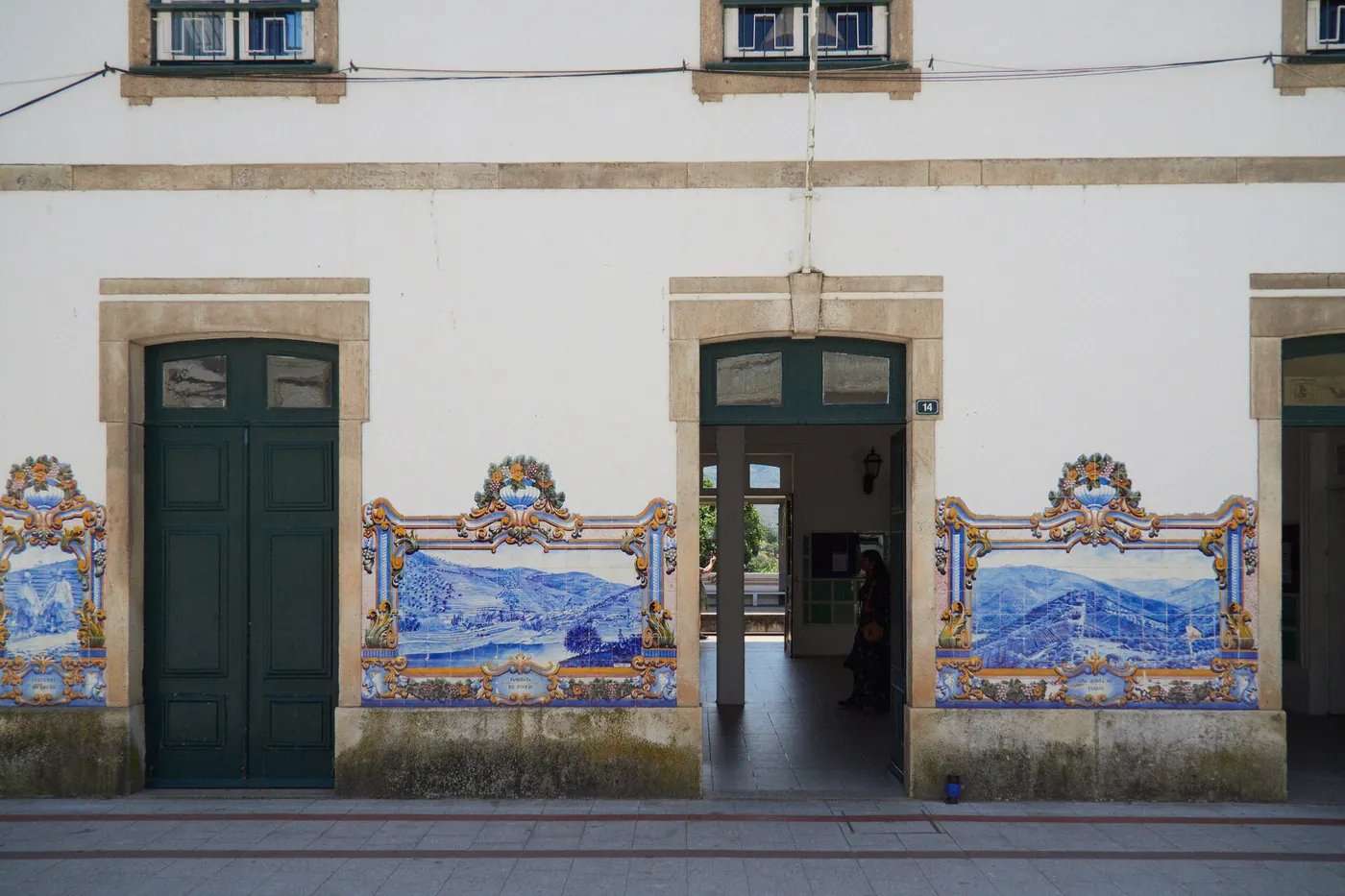
Photo: lumoplank, CC0, via Wikimedia Commons.
Questions About Getting from Porto to the Douro Valley
How far is the Douro Valley from Porto?
About 100-120 km east, depending on the destination and the route. That is roughly 62-70 miles. By road the trip takes about 1 hour 10 minutes to 1 hour 15 minutes in good conditions, and a realistic plan allows up to 2 hours with traffic and stops. The train takes 2 to 3.5 hours because it follows the river.
What is the cheapest way to get from Porto to the Douro Valley?
The intercity bus. One-way Porto to Régua tickets start from under 4-5 EUR on certain schedules with Rede Expressos, and the ride takes 2 to 3 hours. The train is the second-cheapest, with longer segments from around 12 EUR one way. Both drop you in town, so budget a taxi for the final leg to wineries or rural accommodation.
Is there a train from Porto to Pinhão?
Yes. CP trains run from Porto São Bento and Campanhã along the Douro line to Peso da Régua, Pinhão and upriver toward Pocinho, taking 2 to 3.5 hours depending on the service. It is one of the most scenic train routes in Europe, but frequency is limited on some sections, with certain services running only once daily, so check the timetable before you build the day around it.
How much is a taxi from Porto to the Douro Valley?
Travel planners list long-distance fares in the 130-170 USD range one way for the roughly 100 km drive, moving with route, company and time of day. Book in advance with a Porto-based company and confirm the total price, whether highway tolls are included, waiting time and the late-evening return fare before you set off.
Can you do a Douro Valley day trip without a car?
Yes, and most visitors do. The train and bus both reach the valley towns, and organized tours remove the last-mile problem entirely by carrying you from winery to winery. The practical difference: public transport leaves you in Régua or Pinhão village, while tours and private transfers deliver you to the estates and viewpoints themselves.
Can you take a boat from Porto to the Douro Valley?
Yes, as a full-day cruise. Boats sail upstream from Porto to Peso da Régua or Pinhão with breakfast and lunch on board, and most itineraries return you by bus or train in the evening, sometimes as late as 21:00. It is the slowest option in this comparison and spends most of the day on the water, which is either the point or the problem.
Is the train from Porto to the Douro Valley actually scenic?
It is rated among the most scenic train routes in Europe, with the track following the Douro River for long stretches past vineyards, villages and steep terraces. That scenery is the trade for speed: the ride takes 2 to 3.5 hours against roughly 1 hour 15 minutes by road, and frequency is limited on the smaller valley stations.
Which option gets me to the Douro Valley cheapest overall?
The regional train, most days of the year: a few euros each way from São Bento to Pinhão, with the river scenery included in the fare. The comparison table above prices the alternatives, and the honest DIY guide works the full door-to-door arithmetic including the taxi traps at the far end.
Do the roads to the Douro Valley cause motion sickness?
The motorway out of Porto is unremarkable, but the final valley roads, and above all the winding N222 between Régua and Pinhão, are genuinely twisty. Travellers who know they suffer should sit forward, keep the morning coffee light and consider a tablet before the drive in. The train avoids the problem entirely, which is one more quiet argument for the rail options in this guide.